AI study planner that turns lectures into personalized learning roadmaps
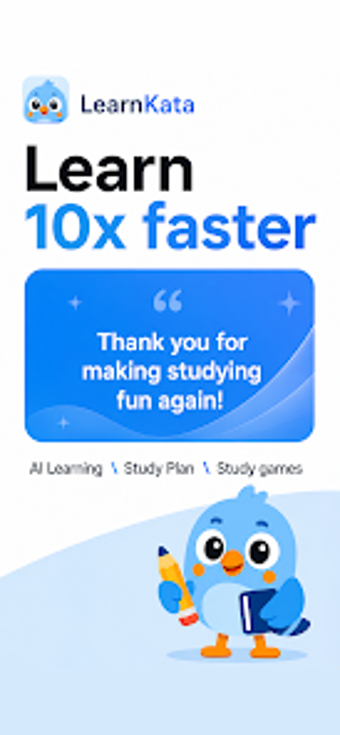
LearnKata, developed by LearnKata, turns course materials into a structured study roadmap for focused revision and deeper understanding. The app ingests lecture slides, PDFs, and audio, then generates personalized study plans, quizzes, and flashcards tied to the uploaded content. It presents a gamified sequence of bite-sized concepts and an AI tutor that cites sources. Designed for university and college students and educators, it helps manage heavy course loads and prioritise exam topics.
What is the app used for?
The app converts raw course materials into a structured learning path that breaks lectures into bite-sized concepts and short lessons. It accepts multiple input types, including:
- PDFs
- PowerPoint slides
- lecture audio
- pasted or handwritten text
Students can sequence revision sessions from those generated items. This workflow treats uploaded course files as the primary source for generated study items and assessments.
How does the app support learning beyond memorization?
Its pedagogical approach uses an AI tutor that provides step-by-step explanations tied to source material and generates active recall exercises. The app automates quizzes, flashcards, and study games and presents a Duolingo-style roadmap of concepts to help learners progress from surface recall to deeper conceptual understanding. The tool includes source-backed citations for answers to reduce unsupported AI responses.
Is the app suitable for university students and educators?
The target audience is university and college students handling large volumes of lecture content, and instructors who want to create activities from existing curriculum. The app supports multiple languages, offers Android, iOS, and web access, and requires a stable internet connection for AI processing. Educators should expect setup time to prepare class materials before assigning student tasks, which affects classroom deployment scheduling.
How does the app track progress and allow customization?
The app provides progress tracking and analytics that highlight strengths and weaknesses, and it creates personalized study plans from user materials. It can transcribe lecture audio directly into study content and includes a weekly energy allotment on free accounts (typically 20 units) that limits AI queries. The developer reports over 40,000 users worldwide, reflecting adoption in higher education environments.
Best for students prepared to invest in structured study routines
The app is a practical option for university learners and instructors seeking a disciplined, goal-focused study approach. It rewards users who invest upfront effort to organize course materials and follow a planned sequence. Those seeking spontaneous, ad hoc revision may find the initial setup cumbersome. For semester-long study cycles, the app suits learners who prioritize deliberate practice and measurable study goals.